We are a FAMILY owned and operated
Dynamic~ CUSTOMER focused and driven~
Light haulage~Deliveries~Removals company
based in Hull East Yorkshire UK. we are proud to support local CHARITY Dove House Hospice and to be part of local life in Hull
Call us now on 01482 829714
Emails
Clarklogistics1@gmail.com
Ashley : Clark395@hotmail.co.uk
Find us on Google maps
Possible Hull's most famous past resident and rightfully so fondly remember by the people of Hull and all over
( Lynne and Paul just came back from The Gambia where he was well known )
(Now the hands on History museum in Hull) It was the School where he went not for his entire childhood age 7 to 9
Wilberforce aged 9
(Hull poet Andrew marvell also went there ) +Hull Museums (At the time Hull grammar School )
Pocklington School Where he went from 12 after been returned from London as his Grandparents were opposed to his Evangelist leanings and Hull Grammar school's headmaster was also an Evangelist
The house he lived in from Birth until his farther died and he was sent to live with his Uncle in London Aged 9
24 August 1759 his date of Birth He was Christened in September at the Holy Trinity Church Hull which is close to where he went to school
Holy Trinity
Wilberforce house is in the heart of Hull's old town near the River Hull the Wilberforce family were merchants and that was the area that the majority of Hull's merchants lived however the Wilberforce family did not build this house but brought it which was unusual as most Hull merchants built their own homes at the time like the grand Maistor house ( the River Hull was Hull's original docks ) (Wilberforce House in Hull was opened as Britain's first slavery museum) His Grandfather also called William Brought it from the Thornton Family in 1732
The same merchant family he had worked for when he moved to Hull
His Work
''William was only 5’4” tall. Once, when he spoke in York Castle Yard, he was described as a shrimp as he stood up on a table to address a huge angry audience, but as he spoke, he quietened them and made them listen. It was said ‘he grew and grew until the shrimp became a whale!’'' Copied via +Hull Museums
It took him 10 attempts to get his bill to abolish the transatlantic slave trade in Britain until it was passed in 1807 114 for and 15 against and this was not the end of the slave trade or his campaigning
"When I consider the magnitude of the subject which I am to bring before the House, a subject, in which the interests, not of this country, nor of Europe alone, but of the whole world, and of posterity, are involved: and when I think, at the same time, on the weakness of the advocate who has undertaken this great cause... it is impossible for me not to feel both terrified and concerned at my own inadequacy to such a task."
"The Transatlantic slave trade, I tell you, is an evil trade. I will not rest until I have effected its abolition."
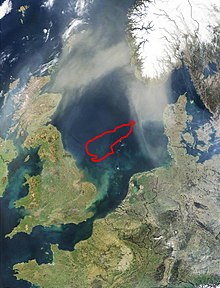
As a city of 730 plus years of age Hull has a lot of history there are two problems a lot of it is either hidden or lost due to things like the Blitz (one example of lost history from the Blitz was the Hull municipal museum on Albion street ) See parts 1 and 2 Hull has a long history connected to the sea as I am sure most of you know And that history is both related to shipping and fishing in fact Hull used to be home to the UK largest fishing fleet before the Cod wars with Iceland devastated the UK fishing industry but what I want to talk about is an older story from Hull fishing past From 1904 The Russian outrage @ dogger Bank which cost 3 fisherman their lives when a Russian fleet mistook the fishing (From Hull The Gamecock fishing fleet,) boats for Japanese torpedo boats and fired upon them despite still been over 20000 miles from Japan at the time The two nations were at war at the time The trawler crane was sunk
on The corner of the Boulevard and Hessle road Hull
The incident nearly lead to war between Britain and Russia
The disaster of 21 October began in the evening, when the captain of the supply ship Kamchatka (Камчатка), which was last in the Russian line, took a passing Swedish ship for a Japanese torpedo boat and radioed that he was being attacked. Later that night, during fog, (so reduced visibility ) the officers on duty sighted the British trawlers, interpreted their signals incorrectly and classified them as Japanese torpedo boats, despite being more than 20,000 miles (30,000 km) from Japan. The Russian warships illuminated the trawlers with their searchlights and opened fire. The British trawler Crane was sunk, and its captain and first mate were killed. Four other trawlers were damaged, and six other fishermen were wounded, one of whom died a few months later. As the trawlers had their nets down, they were unable to flee and, in the general chaos The Russian even fired upon their own ships mistaking them for Japanese war ships killing 2 The total death toll was 5
As a city of 730 plus years of age Hull has a lot of history there are two problems a lot of it is either hidden or lost due to things like the Blitz (one example of lost history from the Blitz was the Hull municipal museum on Albion street ) See part one here
The Next hidden thing :
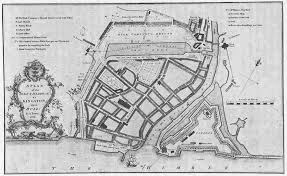
Hull Medieval walls (with the two following exceptions all gone Beverley gate and a small section in East park)
You can still trace where the walls stood:
They ran from the River Hull to the Humber
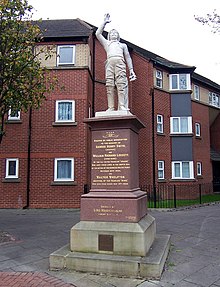
North walls behind Hull college still bears the walls name follow it till it meets wilberforce drive now walk along the old docks (Queens Gardens, Prince's dock and Hull marina ) until you hit the Humber you have followed the path of the old walls (and talk time to admire wilberforce monument older than Nelson's column in London and said to be the inspiration Wilberforce monument once stood close to Beverley gate not that at that time it was dug out)
The only physical remains of the walls is Beverley gate near Prince's dock
The town's old city centre docks where the reason the walls where removed
It is worth noting that all the land at the Marina after the building the old ropery was in the medieval period in the Humber and was later reclaimed
so Techincal once you pass that point in the Medieval Hull you would have been swimming for example the land where the Cdi building is on was Hull Water gate
Hull
East Yorkshire
England
A city of History and a city with a bright future
At 730 plus years old Hull has a long history, while not as long as say Yorkshire neighbour York at nearly 2000 years but still as a city Hull is older than many country like the United states or Germany. And as you can imagine in all them long years the city has a story to tell
Weather its :
How we shut a king out and sparked the English Civil war ( Beverley gate)
Our role in Ending the Slave trade Mp William Wilberforce
How we where heavily bombed in the Blitz ( the over looked and forgotten city of ww2 in the UK by area we where the second most bombed city after London and suffered both the first daylight raid of the war @ Salts end Chemical plant to the last raid the claimed lives, at a cinema Boyes holderness road story stands on the site , ) ( or the last remaining civilian bomb site in the UK form ww2 )
Or as a trade port for 700 + years the UK the Uk first enclosed dock ( now Queens gardens park )
These are just a few examples of Hull Wide and varied past
Walk down Whitefriars gate in Hull you pass a hole in the ground with some bricks in it wait that there is a bit more to it then that that is Beverly gates remains. The only part of Hull's medieval town walls that remain unlike York we did away with ours as they got in the way of the Town docks as they got built.
Why does it matter ?
For one reason
It was where on of the major sparks of the English civil war happened when the King (Charles the First ) was shut out he wanted to inspect the royal armoury with in the city. This lead to the siege of Hull (one of the first battles of the civil war )
Which lead to:
A king been executed
To let them expect a king a change in the treason law
The first and only time Englands been a republic
The only English dictator Oliver Cromwell ( Who banned christmas by the Way )
So I think it is safe to say Beverley gate (Hull )is one of the UK's most important historical locations
#onthisday
949 years ago in #Yorkshire at Stamford bridge a key battle took place when king Harold faced of and won against the viking invaders before having to march to hasting to the more know battle that he would lose
The current situation at the gate is no good for anyone as the site is not correctly utilized, If this was York the site would be a major tourist draw yet the council has let the site go down hill (funding or something not having a go at +Hull City Council just saying )
A better solution needs to be found Hull can not lose a key historical location of national importance ( +Visit Hull & East Yorkshire ) after all it was where The governor of Hull shut out the King Charles the 1st preventing him access to the large arsenal ( royal ) largest outside London I think. Leading to both the siege of Hull and the English civil war. More of this needs making of the site and more in general Hull has such a rich history there is more to Hull the it Maritime history and Wilberforce as big a part of Hull history they are.
While I have always favoured the Glass idea I can see why the +Hull City Council think this want work fair enough but just filling the gate in is the correct answer. It like york saying it is going to knock the walls down, Hull has lost over the years it fort/Garrison ( @ Sammy point where +The Deep stands now ) and all the walls the gate is all that remains of them.
So What to do ?
A few options do exist as I see them ( plus other people E.g +Hull Daily Mail comments )
Take each brick up and fill the hole in and rebuild the remains at street level
or in a Museum/ Which museum in Hull would be best
Leave it as it is ( not ideal )
Glass roof just don't let people walk on it
Just filling the Gate in is not a good Answer it will hide and destroy history
# On this day in history #WW1 Hull Zeppelin raid: 6/7 June 1915 Casualties: 24 people dead and 40 wounded About 40 bombs dropped on the city The midnight raid lasted 30 minutes
One place the bombs hit is Carven Park, Now off Preston Road in Hull but then it was on Craven Street just behind/Near where +Asda Mount pleasant stands today
Bright Street - the premises of Palmer's grocers was destroyed.
Dansome Lane - a saw mill and timber yard destroyed.
Milton Street - incendiary fell in St Mary's Roman Catholic school yard.
Danson Lane - burned out Lear's Stables with a "considerable fire".
Clarence Street - incendiary burned out, no damage.
East Street - explosive bomb demolished two houses. It killed Edward Jordan (10) in number 11, his parents were seriously injured and taken to Naval hospital. Mr and Mrs Hill killed at Number 12.
Victoria Dock - an incendiary in Victoria Dock fell on Swedish ship lying in river basin. Ship's deck slightly damaged.
Tower Street - Wade's Timber Yard bomb severely damaged railway line and bashed holes in the walls of neighbouring warehouses.
The final bomb from the Zeppelin fell on Humber Dock (pictured here in 1913) at 00.15 on Monday 7 June.
It hit the bulwarks of the cargo lighter Crocus. The side of ship was shattered and many holes made through its steel plates.
The Zeppelin pilot
Kapitanleutnant Heinrich Mathy was born on 4 April 1883 in Mannheim, Germany. His father was a bank director. (And I lived and worked in Mannheim for 19 months that one of the reason I can speak German) (and on a further note he used Bridlington to find Hull I was born in Bridlington )
"...War is war, they've shot at me and it's a nasty fire, and yet fighting submarines is nicer than setting towns on fire. But we'll always give them all we have, the harder [we attack] the earlier they will crumble...''
Why was Hull targeted?
It was bad luck.
L-9, under the control of Kapitanleutnant Heinrich Mathy (pictured), had orders to "attack London if possible, otherwise a coastal town according to choice". However, weather conditions were to scupper the original German plans and turn the attention on Hull.
Now that what I call bad luck we where not so unlucky in World war 2 where Hull was intentionally targeted due to our docks
And if you look at the Bomb map above Hull attack looks rather unplanned as you can expect since we where a unintentional target only a few bombs fell on the docks (king George dock which had only opened a year before in 1914 not hit ) Alexander Dock (Home to Green port Hull under construction ) and at the older Victoria dock and along the river Hull
And I think we all know how Hull was heavily bombed in WW2 but often forget or don't even know about the ww1 Zeppelin raids
And I admit that I know about them but not the details or the Dates so I have been learning along with you
# Also on this day in History
1940 – World War II: The Dunkirk evacuation ends – British forces complete evacuation of 338,000 troops from Dunkirk in France. To rally the morale of the country, Winston Churchill delivers his famous "We shall fight on the beaches" speech.
# On this day in history 1944 – World War II: Rome falls to the Allies, the first Axis capital to fall